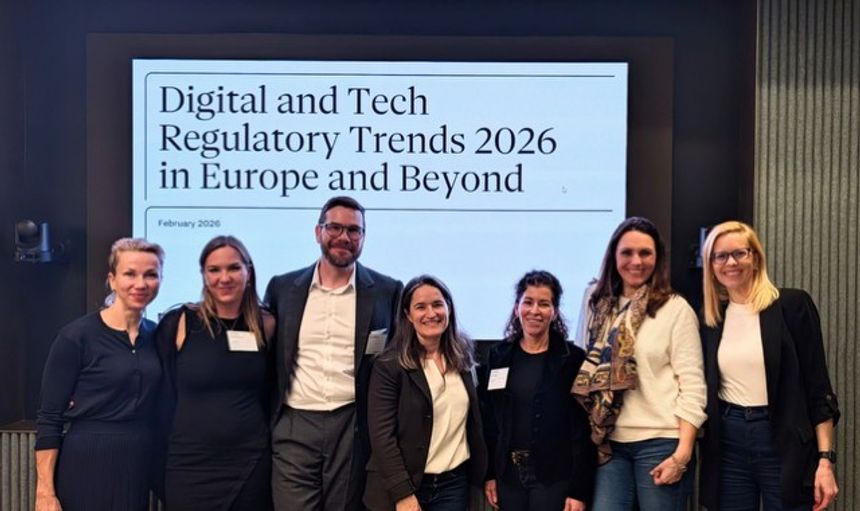














We were delighted to host AILBA in our Freshfields San Francisco office, bringing together an exceptional panel of speakers — including Beth George, Lutz Riede, Carolyn Herzog, and Sarah Binder — for a dynamic discussion on what it means for global companies to operate “between Brussels and Washington.”
Our panel offered a refreshingly candid look at the realities of navigating tech regulation in 2026. A few themes stood out:
- Divergence is turning into contradiction: Relying on “EU‑as‑global‑baseline” no longer works. On issues like algorithmic transparency, fairness testing, and content governance, EU and US laws increasingly point in opposite directions. Companies now face genuine conflicts, not just differences in emphasis.
- The EU digital rulebook keeps accelerating — but it’s also evolving: The AI Act, DSA/DMA, Data Act and cybersecurity reforms are creating the most comprehensive regulatory ecosystem globally. Yet the proposed Digital Omnibus shows the EU is also reflecting on coherence, simplification and reducing friction for businesses.
- Overlapping obligations require cross‑functional teams: Legal, engineering, product, compliance, and policy teams can no longer work in silos. AI Act requirements intersect with GDPR, platform rules, data access obligations, and sectoral regimes — coordination is becoming a core capability, not a nice‑to‑have.
- Companies have to stay nimble: Rules on both sides of the Atlantic are evolving faster than many companies can ship products. Nimble governance structures — built to pivot as laws change — are becoming essential.
- The US regulatory landscape is increasingly fragmented and political: Federal deregulatory efforts collide with assertive state AI laws, constitutional disputes and shifting enforcement signals. This creates a patchwork that demands state‑specific strategies.
Thank you to AILBA, our panellists and all participants for a lively and insightful conversation.